Showing posts sorted by relevance for query Victoria Grossack. Sort by date Show all posts

Friday, 13 July 2018

SPOTLIGHT & GIVEAWAY: THE MERYTON MURDERS: A MYSTERY SET IN THE TOWN OF JANE AUSTEN'S PRIDE AND PREJUDICE - AUDIOBOOK

After writing The Meryton Murders: A Mystery Set in the Town of Jane Austen’s Pride & Prejudice  and The Highbury Murders: A Mystery Set in the Village of Jane Austen’s Emma, Victoria Grossack wanted to try something new: an audiobook! Actually, as she told Meredith at Austenesque Reviews, one of her readers suggested her to do it and she loved the idea.

She found Erin Evan-Walker who is a voice actress and narrator that loves Regency novels and the result is a brand new audiobook on Audible: The Meryton Murders: A Mystery Set in the Town of Jane Austen’s Pride & Prejudice . Victoria and Erin are also currently collaborating on The Highbury Murders: A Mystery Set in the Village of Jane Austen’s Emma

Try your luck in the giveaway below! Two of you will have the chance to win this intriguing mystery Audible audiobook inspired to Jane Austen's Pride and Prejudice.  

Monday, 10 August 2015

SHOULD ELIZABETH HAVE ACCEPTED DARCY'S FIRST PROPOSAL?


(guest post by Victoria Grossack)

I always want to play “what-if” with stories.  Juliet should not have faked her death; Romeo should not have swallowed the poison, and heck, maybe the Montagues and the Capulets should have ended their feud earlier.  So here’s a question: when Mr. Darcy proposes to Elizabeth in Kent, should she have accepted him?

Some will cry out: Of course not!  Because in that case we would not have had the second half of Pride & Prejudice (and amazingly, the proposal scene occurs at the exact midpoint of the story).  And the second half, in which Elizabeth revises her opinion and Darcy atones for all his defects, is absolutely delightful.

But let us put aside the fact that an acceptance by Elizabeth would ruin the story.  If you were living in the novel, how would you advise Miss Elizabeth Bennet?

If your primary concern were money, you would recommend that she accept the proposal immediately. We have not seen Pemberley yet, but Mr. Darcy seems to be very rich and Elizabeth Bennet’s expectations are fairly bleak.  So if we were to take the attitude of Mrs. Collins, we would tell her to accept the proposal immediately.  In fact, Mrs. Collins is one of the few (other than Miss Bingley) who detects Darcy’s interest in Elizabeth, and she is convinced that if Elizabeth knew of his interest in her that her dislike would vanish.

Tuesday, 26 March 2019

INTERVIEW WITH VICTORIA GROSSACK ABOUT THE MANSFIELD PARK MURDERS & GIVEAWAY


Victoria, what made you decide to write The Mansfield Park Murders?

I had already written The Highbury Murders: A Mystery Set in the Village of Jane Austen’s Emma and The Meryton Murders: A Mystery Set in the Town of Jane Austen’s Pride & Prejudice. After each novel appeared, several readers asked me to please write another.

Some readers say that Mansfield Park is their least favorite Jane Austen novel. Would they still like The Mansfield Park Murders?

I’ve heard many Jane Austen admirers say that Mansfield Park is their least favorite of her novels because they don’t care for the heroine, Fanny Price, who is so retiring and timid. But whether you love or hate Fanny Price doesn’t matter for The Mansfield Park Murders, as Fanny doesn’t have a big role in The Mansfield Park Murders. Instead I focused on her younger sister, Susan Price. Susan was described by Austen as being “fearless,” which makes her a better protagonist for a murder mystery. Besides, when Fanny marries Edmund, she moves to Thornton Lacey, so she would not even be living at Mansfield Park.

Saturday, 3 July 2021

SPOTLIGHT ON ... & GIVEAWAY! MRS BENNET'S ADVICE TO YOUNG LADIES: A MOTHER VIEW OF PRIDE AND PREJUDICE


We have a new Austenesque read under the spotlight this weekend.  The book is Mrs. Bennet’s Advice to Young Ladies: A Mother’s View of Pride & Prejudice by Victoria Grossack, a dear friend of My Jane Austen Book Club. Her latest book gives us Mrs. Bennet’s views of the events of Jane Austen’s most popular novel, Pride and Prejudice. Scroll down, enjoy reading the excerpt Victoria has granted us and get your options to win an ebook copy. Good luck and happy weekend!

Saturday, 22 June 2013

TALKING JANE AUSTEN WITH ... VICTORIA GROSSACK & GIVEAWAY OF THE HIGHBURY MURDERS

Victoria Grossack studied Creative Writing and English Literature at Dartmouth College, and is co-author with Alice Underwood of the Tapestry of Bronze series, novels based on Greek myths and set in the late Bronze Age. She is also the “Crafting Fabulous Fiction” columnist at www.writing-world.com. Visit her website at www.tapestryofbronze.com, or contact her at tapestry (at) tapestryofbronze (dot) com.

Welcome on My JA Book Club, Victoria ! I’m very happy you’ve joined our on line club and you accepted to talk Jane Austen with me.

Your Austen-inspired novel, The Highbury Murders,  is  a  mystery  set it in Emma Woodhouse’s village.  Why Highbury and not Mansfield Park or Longbourn? Is Emma your favourite Austen novel?
First, why Highbury?  I chose Highbury for several reasons. Emma has been described as a detective story without a body – however, there actually is a body, and hence the potential for a mystery. Second, Emma’s active imagination makes her a natural detective. 
Secondly, is Emma my favourite Austen novel? That’s extremely difficult to answer. There’s a maturity in Austen’s three later works – Emma, Mansfield Park and Persuasion – which you don’t find in the three that were written earlier – Pride and Prejudice, Sense and Sensibility, and Northanger Abbey. On the other hand, there’s a joy in both Pride and Prejudice and Emma that is absent from the other novels. So, yes, Emma is my favourite but the competition is fierce.

Sunday, 30 March 2014

HAPPY MOTHER'S DAY! JANE AUSTEN AND HER MOTHERS

Alison Steadman as Mrs Bennet (1995)
Today is Mother's Day in the UK, Jane Austen's country, and author Victoria Grossack wants to celebrate it with us,  sharing this brilliant post about Jane Austen's   mothers. Thank you so much, Victoria!

Jane Austen is celebrated for many things: her wit, her irony, her insight into the human heart, her romances, and her skill in creating characters.  This article looks at Jane Austen’s mothers, the ones she brought to life in her stories.

The mothers in Jane Austen’s novels differ in each book.  In part this is due to her mastery of characters – they are all unique and three-dimensional – but they also reflect Jane Austen and her own development as a person and an author.  Jane Austen had two main writing periods.  When she was young, before 1800, she wroteNorthanger Abbey, Pride and Prejudice and Sense and Sensibility.  These books were not published until later, and certainly they were revised, but the mothers in them reflect the author’s youthful attitude.  Between 1800 and 1809 Jane did not produce much, mostly because her life was unsettled.The novels that she wrote later, after finding a new home in Chawton – MansfieldPark, Emma and Persuasion– show motherhood with greater maturity.

Wednesday, 23 May 2018

VICTORIA GROSSACK, IN DEFENSE OF LADY CATHERINE


The older I get, the more I like Lady Catherine. This is partly because, as an ageing woman, I have more sympathy for other older women. Older women are often mocked in fiction: dismissed as silly, no longer beautiful, and frequently poor. Even Jane Austen was not beyond ridiculing them – think of Miss Bates and of Lady Bertram – but Austen also treated many with respect, even when her characters do not (Marianne Dashwood is extremely rude to Mrs. Jenkinson, and Emma is impatient with Miss Bates).

Lady Catherine may be proud, but that is something to be expected of a woman who is the daughter of an earl and the mistress of Rosings Park. And she has, in my opinion, many admirable character traits.

Saturday, 5 March 2016

VICTORIA GROSSACK, IN DEFENSE OF MR COLLINS - READ & WIN NEW MERYTON MYSTERY EBOOK!

Tom Hollander as Mr Collins (2005)
Mr. Collins is a dreadful bore, with his long speeches and his constant apologizing.  He’s a wretched dancer and a ghastly whist player.  He is completely obsessed by his one true love – his relationship to Lady Catherine de Bourgh.  I admit that I would not want to spend many evenings with him!

Still, there are qualities to admire in Mr. Collins, and I think they should be acknowledged.

First, he is a peace-maker.  Obviously there was some quarrel going on between Mr. Bennet and Mr. Collins’s father.  We do not know the grounds for the quarrel, but it had gone on for years.  Probably it was the fault of the senior Collins, as our Mr. Collins said he was always uneasy about it.  At any rate, when his father dies, he takes the first step and writes a letter to Mr. Bennet.

Second, Mr. Collins does his best to make amends.  He resolves to marry one of his cousins, thereby making sure that they will be cared for when their father dies.  Now, he was certainly influenced by the fact that he had been told to marry by Lady Catherine, and the Bennets had a family of five daughters who had reason to welcome him.  Even though he points out that there are many eligible young ladies in his neighborhood, we later learn that most of his neighborhood live rather high, so his cousins may have been the most eligible set of ladies available to him.  He promises to Elizabeth that he would never reproach her for her lack of funds (which is more than Darcy does in his first proposal).  Even though his affection for Elizabeth may be imaginary, his proposal is generous and honorable.

Sunday, 11 December 2016

GIVING GIFTS IN JANE AUSTEN

(by Victoria Grossack)

Are you at a loss, this holiday season, at what to give your loved ones?  Why not take a look at the gifts in Jane Austen’s novels and see if they inspire you?  And beware of the pitfalls, as not all gifts are welcome from all givers.

One of the most frequently bestowed gifts in Jane Austen is money.  The amount may be small, such as the single pound note given by Mrs. Norris to William Price in Mansfield Park (this amount is not given explicitly in the text, but Jane Austen herself told her family that was the amount she meant).  Or the sum may be enormous, as when Darcy bribes Wickham to marry Lydia Bennet in Pride & Prejudice.  Today some people turn their noses up at money, but in Jane Austen’s novels, recipients are almost always appreciative.

Assuming you want to be more personal, let’s consider other significant gifts in Austen’s novels.

The pianoforte.  In Emma (spoiler alert), Frank Churchill ‘anonymously’ gives Jane Fairfax a pianoforte to use during her stay in Highbury.  Of course, Miss Fairfax knows who the donor is, but as she cannot say, the gift makes her vulnerable to unkind rumors.  On the other hand, it is a pretty instrument, a generous gift, and she enjoys playing it tremendously.  What can one learn from this?  It’s always good to remember the tastes of your recipients, and to give them what they lack in certain situations.  Still, do your best not to cause mischief and inconvenience.

Sunday, 16 June 2013

FATHERS IN JANE AUSTEN


(by guest blogger Victoria Grossack)  
As Father’s Day comes around, celebrated on the third Sunday in June in most, although certainly not all, countries around the world, Jane Austen devotees can contemplate the rich array of fathers portrayed in the author’s works.

By all accounts, Jane Austen had a wonderful relationship with her own father.  He believed in her abilities and encouraged her to read anything and everything in his library.  Despite the excellence of her own father, Jane Austen, by exercising her powers of observation and her lively imagination, created a completely different set of fathers and father figures in her six novels.

The Fathers of the Heroines

Mr. Bennet in Pride and Prejudice.  Mr. Bennet has five daughters.  He loves them, especially the heroine, Elizabeth, but not so unconditionally that he is unaware of their shortcomings.  He is witty and insightful but also indolent.  As a father he has been deficient, as he did not save money to buy them husbands, worthless or deserving.  He had not reigned in the excesses of his wife or his younger daughters. Mr. Bennet, perhaps because he is older and therefore wiser, shows more insight into people than do many of the people around him.  He is not taken in by Mr. Wickham, for example; whereas Elizabeth’s mistrust of that officer only occurs after she learns more information.

Monday, 16 October 2017

VICTORIA GROSSACK, LIES & LIARS IN JANE AUSTEN


(by Victoria Grossack)

 In Jane Austen’s works, the bad guys lie.  A lot.

In fact, dishonesty in both word and deed frequently propels the plot.  Let’s take a tour through the deceptions in Jane Austen’s six novels and then discuss her depictions of lies, liars, and those who believe them.

Northanger Abbey.  One of the things I like about this novel is that much of the plot turns on the lies that characters tell about each other.  Most are delivered by John Thorpe, who tells many lies to General Tilney about Catherine Morland, the novel’s protagonist.  Northanger Abbey is, as many people know, Austen’s riposte to the over-the-top melodrama of the gothic novels that were so popular in the late 1700s.  And although Austen incorporated some gothic imaginings, she was able to devise a lovely little novel with prosaic lies.

Wednesday, 29 June 2016

VICTORIA GROSSACK, FOR THE LOVE OF LYDIA


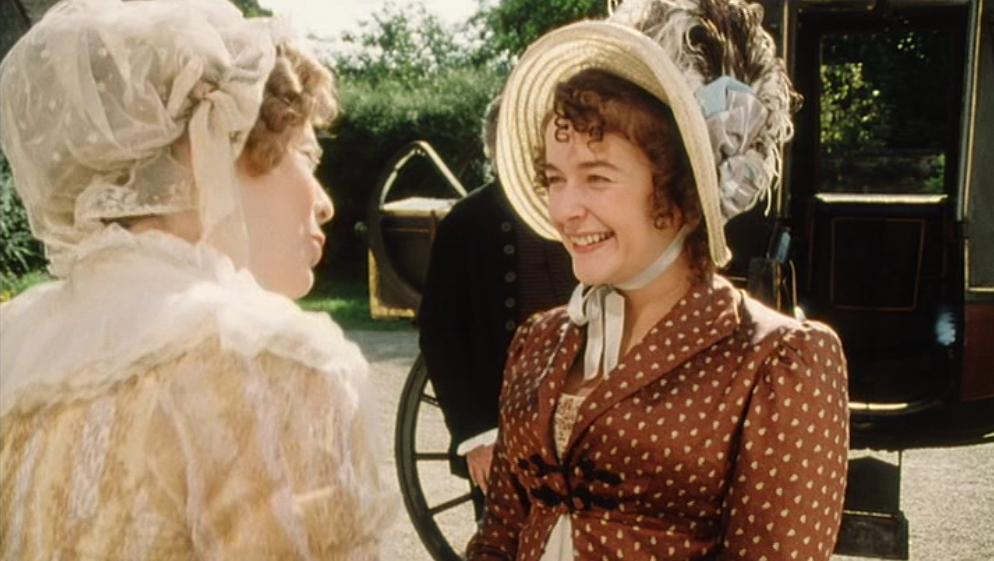
Miss Lydia Bennet!  What can we say about the youngest of the Bennet beauties?  The first thing we notice is that she is determined to have fun.  She dances every dance and she is so absorbed by her games that she can sometimes forget everything else – even the officers.  She describes how she and some of her friends dress up Chamberlayne – perhaps a servant of her uncle’s? – in women’s clothing (yes, there is cross-dressing in Austen).  She chases the redcoats, which some find in bad taste but does show energy.

The second thing is that she refuses to listen to others.  She never listens to her sister Mary, and when her cousin Mr. Collins starts reading aloud from Fordyce’s Sermons, she interrupts him before he has finished three pages.  Her parents and her sisters upbraid her for her rudeness, but in reality Lydia has spared them a very dull evening.  We can understand Lydia’s policy of not listening, with parents and aunts and four older sisters, always ready to tell her what to do.

Although last in a family of five girls, she refuses to remain in the background and elbows her way to the front.  Encouraged by her mother, at fifteen she is already “out” in society, a decision that Elizabeth agrees with Lady Catherine is ill-advised (although not even her ladyship could have stopped Lydia).  But still Lydia is the youngest, and being the youngest meant that in many respects she was the least in her family.

Thursday, 3 October 2013

PERSUASION IN JANE AUSTEN'S PERSUASION AND ... OTHER NOVELS

by guest blogger Victoria Grossack

Some may think that focusing on the art and importance of persuasion in Jane Austen’s last written novel, Persuasion, is inappropriate, for she did not choose this title herself.  The book was published after her death, and its title chosen by one of her brothers, Henry Austen.  While writing it Jane called the story “The Elliots.”  Henry Austen likewise chose the title for his sister’s other posthumously published work, Northanger Abbey, called“Susan” during Jane Austen’s life (readers may notice that Northanger Abbey has no Susan in it; when Jane Austen revised this work, she changed the heroine’s name from Susan to Catherine).Henry Austen may have selected the titlePersuasion based on its similarity to the titles of two of his sister’s other successful works: Pride and Prejudice and Sense and Sensibility.  Perhaps Persuasion, being shorter, merits only a single word.

Jane Austen’s other novels contain explicit examples of persuasion that are vital to their plots.  In Sense and Sensibility, John Dashwoodis persuaded by his wife not to assist his half-sisters.  Pride and Prejudice’s Mr. Bingley is persuaded by his sisters and Mr. Darcy to stay away from Jane Bennet, a decision he regrets and eventually puts aside.  Emma persuades Harriet Smith that Mr. Elton is in love with her.  The Thorpes persuade General Tilney that Catherine Morland is broke.Fanny Price is pressured by many to accept Henry Crawford as a suitor in Mansfield Park; even though she is generally considered the weakest of the heroines, she resists firmly.